News
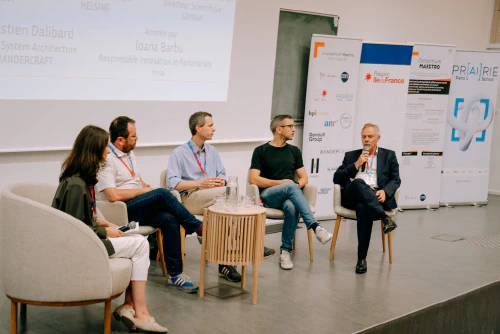
At the Maestro launch on 3 July 2026, Renault, Wandercraft, Helsing, and Safran took part in a round table on physical AI and the role of open-source software in getting robots reliably onto factory floors and into the field.

Maestro
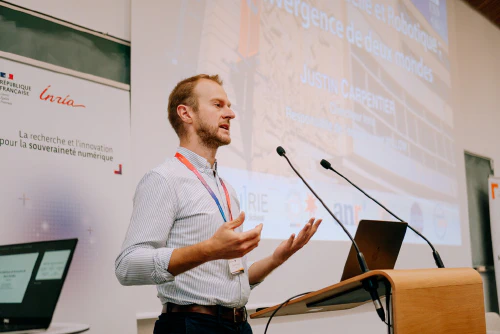
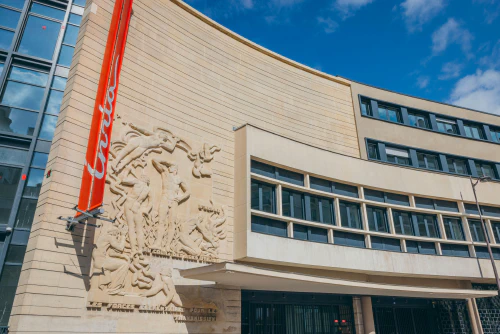
On 3 July 2026, the Centre Inria de Paris hosted the official launch of the Maestro Consortium, bringing together researchers, institutional partners, and industry for a day of talks and round tables on open-source robotics software.
Maestro
On 3 July 2026, the official launch event of the Maestro Consortium will bring together academic researchers and industrial partners — including Renault, Wandercraft, Helsing, and Safran — for a round table on the strategic challenges of physical AI.
Inria
The CRESCENDO project, led by Inria's Willow team and underpinning the launch of the Maestro Consortium, has been selected among the laureates of the "Pionniers de l'intelligence artificielle" programme under France 2030.
Inria
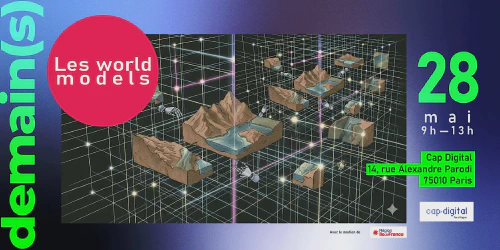
The Maestro Consortium has been selected to exhibit at DEMAIN(S), les World Models, a Cap Digital event dedicated to emerging technologies. Join us on May 28th in Paris.
Inria
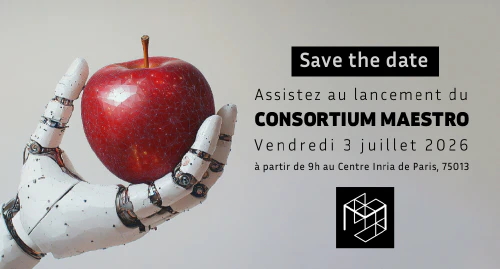
The Maestro Consortium invites you to its official kick-off event on July 3, 2026 at the Inria Paris Centre. A full day of talks, roundtables, and demonstrations.
Inria
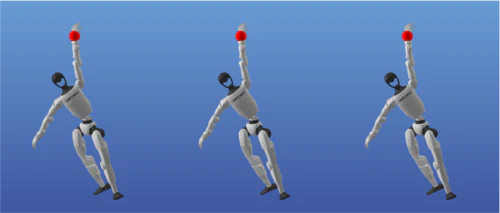
Pinocchio 4 is a landmark major release introducing a fully redesigned constraint API, new closed-loop dynamics algorithms, and a sweeping modernisation of the codebase.
Inria
Following a unanimous Go decision by Inria's leadership, the Maestro Consortium is officially endorsed and moving toward its formal creation. An official kick-off event with founding industrial and academic members is planned for the coming months.

Inria
Bpifrance launches the second round of its Pioneers of AI program, supporting France's most ambitious deep tech AI projects from research to market.

Maestro