
News
Bpifrance launches the second round of its Pioneers of AI program, supporting France's most ambitious deep tech AI projects from research to market.

Maestro

The European Innovation Council has launched a new funding instrument targeting deep tech breakthroughs in Physical AI and embodied intelligence.
Maestro
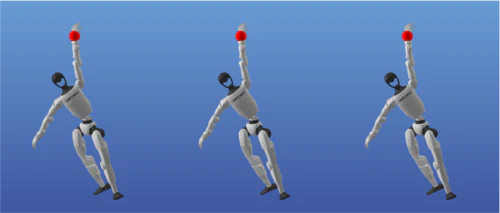
Pinocchio 3.9.0 brings full mimic joint support, expanded CasADi constraint bindings, and a wave of parser and visualizer fixes.

Inria

Renault Group finalises a strategic partnership with Wandercraft, a leader in next generation robotics.
Maestro
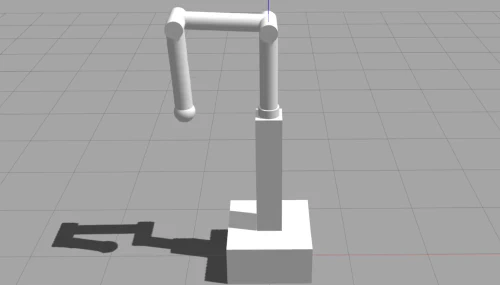
Aligator v0.12.0 delivers cleaner integration and expanded compatibility for robotics optimization and trajectory planning: refreshed CMake with Gersemi sync, improved Pinocchio handling and domain-error macros, and a new collision residual. v0.12.0 aligns with Crocoddyl 3.0.1 and replaces Boost pointers with standard smart pointers for a cleaner, more maintainable codebase.
Maestro
ProxSuite 0.7.2 boosts portability and code quality across C++ and Python. The release adopts Gersemi and Ruff and updates nanobind, improving maintainability and developer efficiency for high‑performance quadratic and linear programming.
Maestro
Pinocchio 3.4.0 delivers focused upgrades to MJCF and developer tooling: vertex-based mesh parsing, default xyz Euler-angle interpretation, resilient qpos keyframe parsing across newlines, and precise site reading.
Maestro

Discover how the Pinocchio software and Maestro initiative are revolutionizing AI-driven robotics at the AI Action Summit Business Day 2025 at Station F, Paris.
Maestro

Inria has published an article highlighting the Maestro consortium, an initiative dedicated to advancing robotics through differentiable control architectures and AI-driven optimization. This recognition underscores Maestro’s mission to develop open-source tools like Pinocchio and foster collaboration between research and industry.
Maestro